Taste of the Himalayas: Where Bhutan’s Paro Valley Feeds Your Soul
Nestled in the eastern Himalayas, Paro, Bhutan, is more than a feast for the eyes—it’s a banquet for the senses. Towering peaks cradle ancient temples, while the aroma of simmering ema datshi drifts through crisp mountain air. Here, food isn’t just sustenance; it’s a celebration of culture, grown in terraced fields and served with quiet pride. The valley breathes slowly, in rhythm with the seasons, and every meal reflects a deep connection to the land and its people. You don’t just visit Paro—you taste it, feel it, carry it with you long after you’ve left the mountain mists behind.
First Impressions: Landing in Paro – A Gateway Wrapped in Mist and Flavor
Paro International Airport is often described as one of the most dramatic landings in the world, and for good reason. As the plane descends through narrow valleys flanked by forested ridges, passengers hold their breath—not just from the thrill, but from the sudden immersion into a world untouched by haste. The runway appears almost impossibly short, carved into the mountainside, with prayer flags fluttering like silent blessings in the wind. Upon stepping onto the tarmac, the first sensation is the clarity of the air—thin, cool, and laced with the faint scent of pine and woodsmoke. It’s a sensory prelude to what defines Paro: authenticity.
Unlike many tourist destinations shaped by mass travel, Paro remains deeply rooted in tradition. There are no sprawling resorts or neon signs. Instead, the valley reveals itself in quiet details: a farmer guiding yaks through a barley field, a woman weaving baskets near her stone house, the distant chime of temple bells carried on the breeze. This stillness is not emptiness—it is presence. And at the heart of that presence is food. In Bhutanese culture, offering a meal is an act of generosity, a sign of welcome that transcends language. Even at the airport’s modest café, travelers may find a small bowl of roasted buckwheat or a cup of butter tea waiting—a humble beginning to a journey defined by nourishment.
The landscape itself shapes the palate. At nearly 2,200 meters above sea level, Paro’s climate is cool and temperate, ideal for slow-growing crops that develop rich flavors. The terraced fields that climb the hillsides are not just scenic—they are lifelines. Red rice, potatoes, and chilies thrive here, cultivated without chemical fertilizers, often by hand. The rhythm of life follows the seasons: planting in spring, harvesting in autumn, preserving through winter. This agricultural cycle is not merely practical; it is spiritual. Farmers begin their work with prayers, acknowledging the land as a giver of life. To taste food from Paro is to taste this intention, this quiet reverence woven into every grain and leaf.
The Heart of Bhutanese Cuisine: Staples, Spices, and the Spirit of Simplicity
Bhutanese cuisine is often misunderstood as merely spicy, but its essence lies in balance. Meals are built on a foundation of simplicity, where few ingredients are used, but each is given respect. The core of Paro’s food culture revolves around red rice, chilies, cheese, and fermented vegetables—humble elements transformed into deeply satisfying dishes. Red rice, grown locally in the valley’s terraces, is nutty and slightly chewy, rich in nutrients due to its minimal processing. It is more than a staple; it is a symbol of self-sufficiency and tradition.
At the center of Bhutanese flavor is ema datshi—the national dish, consisting of chilies cooked in a creamy sauce made from local cheese. While some versions are fiery, others are milder, tailored to individual palates. What makes ema datshi special is not its heat, but its role in daily life. It is eaten at breakfast, shared at dinner, and often served to guests as a gesture of warmth. The cheese, known as datshi, is made from cow or yak milk and ranges from soft and spreadable to firm and aged. Its tangy, milky flavor cuts through the spice, creating a harmony that mirrors the Buddhist ideal of balance—neither too much nor too little.
Other dishes reflect this philosophy. Shamu datshi, a stew of mushrooms and cheese, makes use of wild varieties foraged from the forest—morels, wood ears, and straw mushrooms—each adding an earthy depth. Jasha maru, a spiced chicken curry with a tomato-chili base, is traditionally served during Losar, the Bhutanese New Year, symbolizing prosperity and renewal. Even snacks carry meaning. Khabzey, a crunchy pastry made with barley flour and butter, is often offered during religious festivals as a symbol of good fortune.
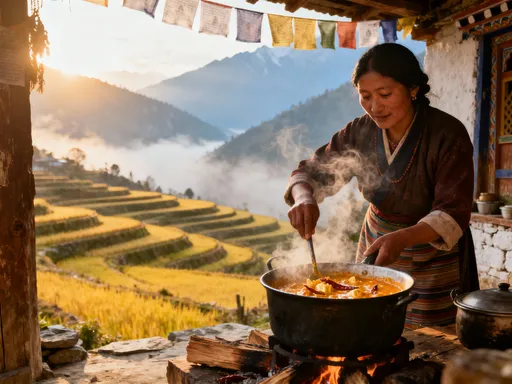
The simplicity of Bhutanese cooking is not a limitation—it is a strength. There are no elaborate sauces or imported ingredients. Instead, meals are prepared with care, often in iron pots over wood fires, allowing natural flavors to shine. This approach reflects the broader cultural values of mindfulness and gratitude. Eating is not rushed; it is a moment to pause, to acknowledge the effort behind the meal, and to connect with those around the table. In a world of fast food and constant distraction, Paro offers a different rhythm—one where food is not just consumed, but honored.
From Farm to Table: How Paro’s Highlands Nourish Its Kitchens
The journey of food in Paro begins long before it reaches the kitchen. It starts in the early morning light, when farmers walk the narrow paths between terraced fields, their boots damp with dew. These fields, carved into steep slopes over centuries, are a testament to human perseverance. Without the use of heavy machinery, crops are planted, weeded, and harvested by hand. The soil is enriched with natural compost, and water flows through ancient irrigation channels, guided by generations of knowledge.
Red rice is sown in spring, when the valley shakes off the last chill of winter. Seedlings are nurtured in nurseries before being transplanted into flooded paddies, where they grow slowly under the high-altitude sun. By autumn, the fields turn golden, and families gather to cut the stalks, bundle them, and carry them home to dry. Potatoes, another staple, are planted in rotation to preserve soil fertility. Buckwheat, used for flour and porridge, thrives in cooler areas and is harvested before the first snow. Every crop is treated with care, not just for its yield, but for its role in sustaining the family through the long winter months.
Preservation is a crucial part of this cycle. Vegetables are sun-dried on rooftops, meat is smoked over open fires, and cheese is stored in wooden containers. Fermentation is widely used—cabbage becomes a tangy side dish, and milk turns into thick yogurt or aged cheese. These methods are not relics of the past; they are practical solutions that ensure food security and reduce waste. They also contribute to the unique flavors of Bhutanese cuisine—smoky, sour, and deeply layered.
Many farmers in Paro have never used chemical fertilizers or pesticides. Their methods are organic by tradition, not by trend. Seeds are saved from one harvest to the next, maintaining heirloom varieties that are well-adapted to the local climate. This commitment to natural farming has preserved the purity of the land and the quality of the food. When visitors taste a bowl of red rice or a piece of homemade cheese, they are experiencing something rare: food grown with patience, wisdom, and respect.
Temple Treats and Homestay Feasts: Where to Experience Authentic Flavors
To understand Paro’s food culture, one must step beyond restaurants and into the spaces where food is woven into daily life—temples and homes. At Kyichu Lhakhang, one of Bhutan’s oldest and most sacred temples, food plays a quiet but vital role. Pilgrims offer butter lamps and receive small portions of tsampa, roasted barley flour mixed with butter and sugar. This simple food is not just a snack; it is a blessing, a way of sharing merit. The act of eating together—monks, locals, visitors—creates a moment of unity, where distinctions fade and all are nourished in body and spirit.
For a deeper immersion, homestays offer an unparalleled window into Bhutanese life. In villages like Drugyel Dzong or Drukgyal, families open their homes to travelers, sharing not just rooms, but meals and stories. Breakfast might begin with suja, the traditional butter tea made by churning tea leaves, salt, and yak butter. Its savory taste surprises some at first, but it quickly becomes comforting—a warm shield against the mountain cold. As the day unfolds, guests may help prepare lunch, rolling momos—steamed dumplings filled with spiced meat or vegetables—alongside their hosts.
Evening meals are often the most memorable. A low wooden table is set with small bowls of red rice, ema datshi, and a fresh salad of radishes and cilantro. The host may share the story behind a dish—how the cheese was made by their mother, how the chilies were harvested from their garden. There is no script, no performance. These are not tourist shows; they are real moments of hospitality. Children giggle as they teach visitors how to eat with their hands, elders smile as they offer second helpings. In these homes, food becomes a language of kindness, spoken without words.
Some homestays include visits to nearby farms or forests, where guests learn to identify edible plants or help with milking yaks. These experiences deepen the appreciation for what appears on the plate. They also support rural livelihoods, ensuring that traditional ways of life can continue. By choosing to stay with a local family, travelers do more than see Paro—they become part of it, if only for a few days.
Street Bites and Market Magic: A Walk Through Paro’s Weekend Market
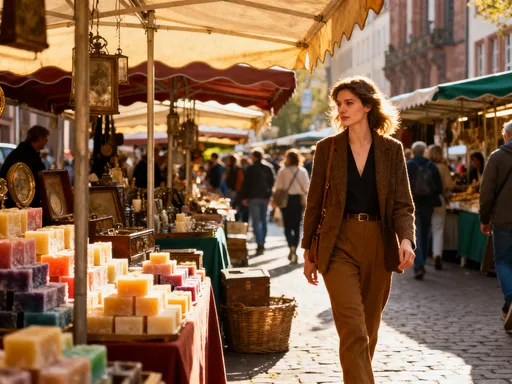
Every Saturday, Paro’s quiet town center transforms into a vibrant tapestry of color, scent, and sound. The weekend market, held in the heart of Paro town, is not a tourist attraction—it is a living marketplace where locals buy, sell, and socialize. Stalls overflow with seasonal produce: pyramids of red and green chilies, baskets of wild nettles, heaps of purple yams, and jars of golden honey. The air hums with conversation, the clink of metal scales, and the sizzle of food cooking over portable stoves.
This is where Paro’s culinary soul is most visible. Vendors serve hot, freshly made khabzey—crispy, diamond-shaped pastries dusted with sugar—straight from the oil. Others ladle steaming bowls of jasha maru, the spiced chicken stew fragrant with ginger, garlic, and chili. Suja is poured from large thermoses, and small cups of ara, a traditional rice or millet wine, are offered to regular customers. The market is not just about sustenance; it is a social ritual, a place to catch up with neighbors and share news over a warm snack.
For visitors, the market is a feast for the senses. One can taste wild strawberries in summer, sample dried beef in winter, or try a rare mushroom found only in the higher forests. Vendors are patient, often offering small tastes before a purchase. They speak little English, but their gestures are warm, their smiles genuine. Children dart between stalls, clutching bags of roasted corn, while elders sit on wooden benches, sipping tea and watching the world go by.
The market also reveals the deep connection between food and seasonality. There are no imported tomatoes or out-of-season berries. What is available depends entirely on what has been harvested. In spring, fiddlehead ferns and fresh greens dominate. In autumn, pumpkins and apples take center stage. This rhythm teaches a quiet lesson: that food is not something to be demanded at any time, but something to be received with gratitude when it arrives. The Paro market is not just a place to shop—it is a living archive of tradition, where food, culture, and community are inseparable.
Cooking with the Locals: A Hands-On Taste of Tradition
In recent years, more travelers have sought experiences that go beyond sightseeing. In Paro, one of the most meaningful ways to connect with the culture is through cooking. Guided culinary sessions, often hosted in village homes, invite guests to step into the kitchen and learn from local cooks. These are not formal classes, but shared moments of creation. A mother may demonstrate how to grind spices with a stone mortar, her hands moving with practiced ease. A grandmother might show how to fold momos just right, so they hold their shape when steamed.
Participants knead dough, stir pots, and taste dishes before they are served. They learn that ema datshi begins with roasting chilies over an open flame, then blending them with cheese and a touch of water until smooth. They discover that red rice must be soaked before cooking to bring out its full texture. There is no rush, no pressure to be perfect. Mistakes are met with laughter, and every attempt is praised. The goal is not to produce a flawless meal, but to participate in a tradition, to feel the warmth of the fire, the scent of spices, the joy of creation.
These cooking experiences do more than teach recipes—they support local communities. Many are organized through community-based tourism initiatives, ensuring that income stays within the village. Women, who are often the keepers of culinary knowledge, gain recognition and economic opportunity. Young people see value in preserving their heritage. For travelers, the act of cooking becomes a bridge—between cultures, generations, and hearts.
At the end of the session, everyone sits down to eat. There is pride in tasting a dish you helped make, but more than that, there is connection. Strangers become friends over shared effort and shared food. The meal is simple, but it is unforgettable—not because of its complexity, but because of the story behind it.
Savoring Sustainability: How Food Tourism Supports Paro’s Future
As global interest in authentic travel grows, so does the responsibility to protect the places we visit. In Paro, food tourism has the power to sustain both the environment and the culture—if done mindfully. Choosing homestays over hotels, eating local food instead of imported dishes, and respecting customs such as removing shoes before entering a home—these small choices make a difference. They reduce waste, support local economies, and honor the values of the community.
Community-based initiatives are playing a key role in this effort. Training programs help villagers become guides, cooks, and hosts, ensuring that tourism benefits everyone, not just a few. Some villages have established cooperatives to sell organic produce and handmade crafts directly to visitors, cutting out middlemen and preserving fair prices. These efforts are not about commercializing tradition, but about protecting it—allowing families to stay on their land, pass down knowledge, and maintain their way of life.
Sustainable food tourism also means listening. It means understanding that not every kitchen is open for tours, that some rituals are private, and that silence can be as valuable as conversation. It means leaving no trace, thanking hosts sincerely, and carrying home not just souvenirs, but lessons. When travelers approach Paro with humility and respect, they become stewards of its future.
In this way, a meal becomes more than flavor. It becomes an act of preservation—an investment in clean soil, in strong communities, in cultural continuity. Every bite supports a farmer, a cook, a child learning to make momos. It is a quiet but powerful form of care.
A Plate Full of Peace
In Paro, every bite tells a story—of mountains shaped by time, of hands that plant and harvest with care, of hearts that welcome strangers with warmth. The journey through its flavors is not just about what’s on the plate, but what it represents: harmony with nature, respect for labor, and the deep contentment found in simplicity. There is no rush, no excess, no pretense. There is only what is real—food grown with intention, shared with love.
To taste Paro is to understand Bhutan’s soul. It is to feel the quiet strength of a culture that values balance, mindfulness, and community. In a world that often feels loud and hurried, Paro offers a different way—a reminder that nourishment is not just physical, but emotional, even spiritual. The mountains do not shout; they stand in silence. The people do not boast; they offer tea. The food does not dazzle; it satisfies.
And in that satisfaction, there is peace. Not the absence of noise, but the presence of meaning. When we eat with awareness, when we honor the source of our food, when we share a meal with open hearts, we touch something timeless. We carry that peace with us, long after the last bite is gone, long after the mountain mist has closed behind us. In Paro, we do not just find flavor—we find belonging.