You Won’t Believe What I Experienced at Iguassu’s Cultural Heart
Iguassu Falls isn’t just about thundering water—it’s alive with culture. I went expecting nature, but left transformed by the rhythm, flavors, and stories of the people. From Guarani traditions to vibrant local festivals, I discovered a side of Brazil few talk about. This is more than a trip report—it’s an invitation to feel the pulse of a place. If you think Iguassu is just a photo spot, you’re missing half the magic. Let me show you the soul behind the spray.
First Encounter: Beyond the Tourist Trail
Arriving in Foz do Iguaçu, the air was thick with humidity and the faint scent of grilled meat from nearby churrascarias. The city buzzed with a quiet energy—buses painted in bright colors, street vendors selling handmade crafts, and families gathering in shaded plazas as the afternoon sun softened. Unlike the polished tourist centers I had expected, this border town where Brazil, Argentina, and Paraguay meet felt authentically lived-in. The falls were the draw, of course, but within hours, I realized that the true heartbeat of the region wasn’t just in the roar of water, but in the daily rhythms of its people.
My initial expectations had been shaped by postcards and travel blogs—picturesque viewpoints, mist-covered cliffs, and panoramic vistas. What I didn’t anticipate was how quickly the natural wonder would become a backdrop to something deeper: human connection. As I walked through the central market, an elderly woman offered me a warm chipa, a cheese bread made from cassava flour. Her smile said more than her limited Portuguese could express. That small gesture marked the beginning of a shift—from seeing Iguassu as a destination to experiencing it as a living, breathing community.
It was on my second evening, sitting near the illuminated falls while a group of local musicians played rhythmic beats on hand-carved drums, that I truly sensed the cultural richness beneath the surface. The music wasn’t for tourists; it was a weekly gathering, a tradition passed down through generations. People danced barefoot on the grass, children laughed in circles, and elders nodded along with closed eyes. In that moment, I understood: the culture here isn’t performed—it’s lived. And it’s present in every greeting, every shared meal, every story told beneath the canopy of the Atlantic rainforest.
The Guarani Legacy: Roots Beneath the Rainforest
The Guarani people have called this region home for centuries, long before the borders of modern nations were drawn. Their presence is woven into the land, language, and spirit of southern Brazil. Today, several Guarani communities live in and around the Iguassu region, maintaining traditions that honor nature, ancestry, and spiritual balance. To visit Iguassu without acknowledging their legacy is to miss a foundational layer of its identity. I made it a priority to learn directly from them, participating in a community-led cultural demonstration that offered insight far beyond any museum exhibit.
During the visit, I was welcomed into a communal space shaded by native trees, where elders shared stories in Guarani, translated softly by a bilingual guide. One elder spoke of Yvy Maraey, the 'Land Without Evil,' a central concept in their cosmology—a vision of harmony between people and the earth. As he spoke, children wove palm leaves into intricate baskets, while women painted symbolic patterns onto ceramics using natural dyes. The artistry wasn’t decorative; each design carried meaning, a visual language passed from one generation to the next.
The highlight was a traditional dance performed at dusk, when the forest echoed with the sound of maracas and deep, resonant chants. Dancers wore feathered headdresses and body paint made from urucum, a red seed used for both ceremony and protection. The movements mimicked animals, wind, and flowing water—elements they believe carry spiritual messages. I was invited to join a circle dance, and though my steps were clumsy, the warmth of inclusion was undeniable. This wasn’t a show for visitors; it was a practice of cultural continuity, shared with respect and intention.
What struck me most was how tourism, when done ethically, can support preservation. The community operates guided visits with clear boundaries—no intrusive photography, no commodification of sacred rituals. Visitors contribute through fair fees that fund education and healthcare initiatives. By choosing community-led experiences, travelers help sustain traditions rather than distort them. The Guarani don’t seek to be relics of the past; they are active participants in Brazil’s present, and their resilience is a quiet testament to the power of cultural pride.
Rhythm of the Region: Music and Dance in Everyday Life
Music in Foz do Iguaçu isn’t confined to concert halls or tourist stages—it spills into the streets, parks, and backyards. One afternoon, I followed the sound of hand drums to a small plaza where a circle of musicians played a blend of Afro-Brazilian rhythms and regional folk beats. No stage, no tickets, just pure expression. An older man handed me a tambourine and gestured for me to join. I hesitated, but his laughter put me at ease. Within minutes, I was tapping along, surrounded by strangers who felt like neighbors.
Paraná, the state where Iguassu is located, has its own distinct musical traditions that often go unnoticed amid the louder fame of samba or bossa nova. One such form is the catira, a dance and music style rooted in the lives of rural woodcutters and farmers. Characterized by rhythmic foot-stomping, bamboo flutes, and call-and-response singing, catira reflects the hardships and joys of countryside labor. I had the chance to attend a workshop led by a local cultural group, where we learned basic steps and rhythms. The movements were simple but powerful—stomping, clapping, turning in unison. My attempts were met with encouraging smiles, and by the end, I felt the deep satisfaction of moving in time with others, connected by rhythm.
Evening performances in public spaces are common, especially during weekends and holidays. I watched a group of teenagers perform a fusion of traditional dance and modern choreography, their costumes blending indigenous patterns with urban flair. It was a reminder that culture isn’t static—it evolves, adapts, and finds new ways to express itself. Music here serves as both celebration and resistance, a way for communities to assert their identity in a rapidly changing world.
The role of rhythm extends beyond entertainment. It’s a form of storytelling, a method of healing, and a tool for unity. In homes, grandparents teach children songs that recount family histories. In schools, music programs emphasize regional instruments like the berimbau and the reco-reco. For travelers, participating—even modestly—can open doors to deeper understanding. A shared beat, a clumsy dance step, a moment of laughter—these small exchanges build bridges that last far beyond the trip.
Taste of Tradition: Food as Cultural Gateway
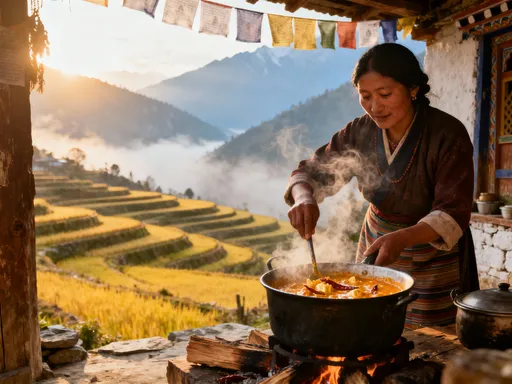
One of the most intimate ways to experience a culture is through its food, and in Foz do Iguaçu, every meal felt like an invitation. I was fortunate to spend an afternoon with a local host family, where I learned to prepare barreado, a slow-cooked beef stew that’s a hallmark of regional cuisine. The dish takes over twelve hours to cook, sealed in a clay pot with banana leaves and spices. As we stirred the rich, smoky mixture, Dona Elisa, the matriarch, shared how her grandmother used to prepare it for Sunday gatherings. 'This isn’t just food,' she said. 'It’s time. It’s patience. It’s family.'
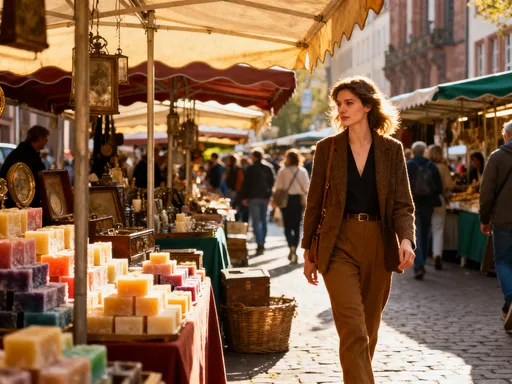
Another staple I quickly grew to love was chipa, a chewy cheese bread made from cassava and yuca flour. Unlike wheat-based breads common in other regions, chipa reflects the indigenous influence on local diets. I sampled dozens of variations at the Feira do Bosque, a bustling open-air market in the heart of the city. Vendors proudly displayed their versions—some soft and golden, others crisp on the outside, oozing cheese within. One woman offered me a warm one fresh from the oven, dusted with sesame seeds. 'This is how we start our mornings,' she said. 'With something handmade, something real.'
Drinks, too, carry cultural significance. Tereré, a cold infusion of yerba mate served in a gourd with a metal straw, is more than a beverage—it’s a social ritual. Families gather in the shade, passing the gourd from hand to hand, sharing stories as they sip. I was invited to join one such circle, where the bitter, herbal drink was mixed with mint and lemon. The host explained that tereré originated with the Guarani, who valued mate for its energy and medicinal properties. Today, it’s a symbol of hospitality and togetherness, especially in the sweltering heat.
For travelers seeking authenticity, the key is to step beyond tourist restaurants. Local markets, family-run lanchonetes, and community events offer the most genuine experiences. When dining, a simple 'obrigada' or 'muito bom' goes a long way. Asking questions—'How is this made?' or 'What does this dish mean to you?'—shows respect and opens conversations. Food here isn’t just fuel; it’s memory, identity, and love served on a plate.
Festivals and Seasons: Timing Your Visit for Cultural Depth
Timing a visit to Iguassu around local festivals can transform a scenic getaway into a profound cultural journey. While the falls are breathtaking year-round, certain months bring unique celebrations that reveal the soul of the region. One of the most vibrant is the Encontro de Culturas, a multi-day festival that showcases the diverse heritage of Foz do Iguaçu—Brazilian, Paraguayan, Argentine, and indigenous traditions all come together in music, dance, and food. I attended during a golden autumn weekend, when the plazas were alive with color, sound, and scent.
The festival featured parades with elaborate costumes, folk dance troupes from surrounding towns, and artisan stalls selling handwoven textiles, pottery, and natural soaps. Children danced in traditional dress, their faces painted with indigenous symbols. At night, open-air stages hosted live performances—everything from Guarani chants to Paraguayan harp music. What made it special was the sense of community participation. This wasn’t a commercial event; it was a celebration of shared identity, organized by local associations and supported by city funding.
Another notable event is the Festa do Peão, a rural rodeo and country fair that honors the region’s agricultural roots. While less internationally known than São Paulo’s version, it’s deeply authentic—local cowboys compete in horseback events, while families enjoy grilled meats, live sertanejo music, and craft exhibitions. I watched a young girl win a ribbon for her handmade cheese, her pride evident as she stood beside her parents. These moments, unscripted and heartfelt, are what make cultural festivals so powerful.
Religious celebrations also play a role. During Holy Week, processions wind through the streets, with participants dressed in traditional robes, carrying candles and crosses. Though rooted in Catholicism, these events often blend with local customs, such as offerings of flowers at natural sites near the falls. The connection between faith, nature, and community is palpable. For travelers, visiting during these times means witnessing traditions that have shaped local life for generations. To avoid peak tourist crowds while still experiencing culture, consider late April to early June or September to November—shoulder seasons when the weather is pleasant and festivals are frequent.
Behind the Scenes: Connecting with Locals Beyond the Script
Some of my most meaningful experiences in Iguassu happened not on guided tours, but in quiet, unplanned moments. Staying at a family-run guesthouse on the edge of town allowed for conversations that went far beyond typical tourist exchanges. The owners, Seu Carlos and Dona Lúcia, welcomed me like a daughter, inviting me to join their evening meals and weekend outings. Over plates of feijoada and glasses of guaraná, we talked about life in Foz—its changes, challenges, and joys.
One Sunday, they took me to visit relatives in a nearby village, where we attended a small community fair. There were no signs in English, no souvenir stands—just neighbors selling homemade sweets, repairing tools, and playing cards under a tin roof. I helped an elderly woman fold pastéis, and though we spoke different dialects, we laughed over my messy wrapping technique. These interactions, unstructured and genuine, offered a depth of understanding no brochure could provide.
Language was a bridge, not a barrier. My limited Portuguese didn’t stop people from communicating—they used gestures, drawings, and patience. I made an effort to learn key phrases: 'Bom dia,' 'Onde fica o mercado?' 'Posso ajudar?'—and each attempt was met with encouragement. One teenager even offered to practice English with me in exchange for Portuguese lessons. These small exchanges built trust and opened doors to experiences I wouldn’t have found on my own.
Slow travel made all the difference. Rushing from viewpoint to viewpoint would have left me with beautiful photos but shallow memories. By staying longer, moving at a local pace, and saying 'yes' to invitations, I formed connections that enriched my journey. The value isn’t just in what you see, but in who you meet and how you’re changed by them. Respectful engagement—listening more than speaking, giving more than taking—creates a reciprocal exchange that benefits both visitor and host.
Why Culture Completes the Iguassu Experience
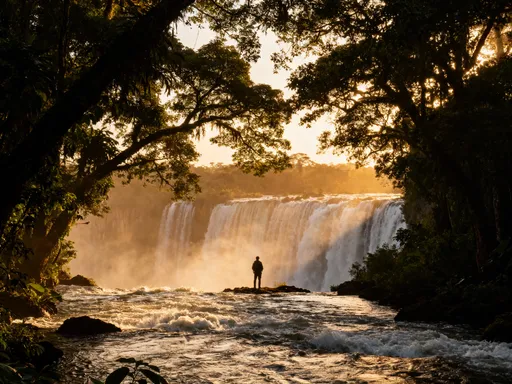
Standing at the edge of the falls, feeling the mist on my face and the ground tremble beneath my feet, I was awestruck by nature’s power. But it was the human stories—the music, the meals, the shared silences—that gave the experience lasting meaning. Iguassu is not just a natural wonder; it is a cultural landscape shaped by centuries of living, believing, and creating. To see only the water is to see half the picture. The other half lies in the hands that weave, the voices that sing, the elders who remember.
There’s a risk in reducing destinations to their scenic highlights. When travelers focus solely on viewpoints and photo ops, they miss the deeper layers that make a place unique. Culture is not an add-on; it is the context that gives meaning to the landscape. The Guarani see the falls as sacred, a gift from the gods. Farmers in the region speak of the rains that feed their crops as blessings. Artists paint the mist in colors that cameras can’t capture. These perspectives transform a waterfall into a living symbol of life, resilience, and continuity.
For those planning a visit, preparation goes beyond packing sunscreen and good shoes. It includes cultivating curiosity, doing basic research on local customs, and approaching the journey with humility. Learning a few words of Portuguese, understanding regional etiquette, and choosing responsible tour operators all contribute to a more meaningful experience. Most importantly, come with an open heart—one willing to listen, to participate, and to be changed.
In the end, Iguassu isn’t just a destination. It’s a story told in water, song, and soil—a story that invites you not just to witness, but to belong, even if only for a moment. The falls will always roar, but it’s the quiet moments—the shared meal, the handcrafted gift, the smile from a stranger—that stay with you. That’s the magic no photograph can hold. That’s the soul behind the spray.