You Won’t Believe What Florence Hides Behind Its Renaissance Face
Florence isn’t just a postcard of domes and statues—it’s alive with cultural rhythms waiting to be felt. I wandered beyond the crowds, stumbled into quiet courtyards, and joined local artisans shaping clay like their ancestors did. This city doesn’t just show history—it lets you live it. From forgotten frescoes to hands-on workshops, Florence rewards the curious. If you’re ready to experience art as a verb, not a noun, this journey is for you.
The Pulse of Renaissance Living
Florence breathes with a rhythm older than its cobblestones. Beyond the polished façades of the Duomo and the Uffizi, life unfolds in neighborhoods where tradition is not preserved behind glass but lived with quiet pride. The Oltrarno district, nestled on the quieter southern bank of the Arno River, pulses with this authenticity. Here, the morning light filters through laundry strung between centuries-old buildings, and the scent of fresh bread mingles with the earthy aroma of leather from open-front workshops. Church bells still mark the hours, not as nostalgia, but as part of a daily cadence that residents follow with unconscious grace.
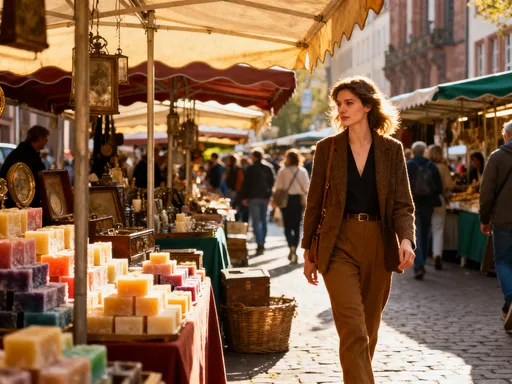
Walking through Santo Spirito Square, you’ll find elderly men playing chess beneath the porticoes while artisans sand wooden frames or stitch handbags behind glassless windows. These are not performances for tourists—they are moments of ordinary life, unchanged for generations. The weekly market at Porta Sant’Ambrogio offers another window into local rhythms. Stalls overflow with sun-ripened tomatoes, bunches of wild rosemary, and wheels of pecorino cheese wrapped in parchment. Vendors call out greetings in rapid-fire Italian, their hands moving deftly as they weigh produce on brass scales. To experience Florence this way is to understand that its Renaissance soul isn’t confined to museums—it’s embedded in the pace, the gestures, the unspoken rituals of daily existence.
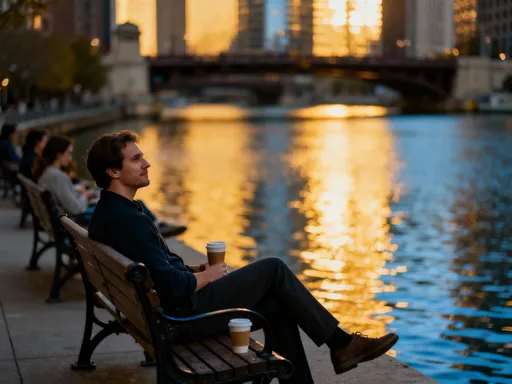
For travelers seeking this deeper connection, the key is presence over itinerary. Instead of rushing from landmark to landmark, linger in a neighborhood for a full day. Visit the same bakery each morning. Learn the barista’s name at your local café. Sit on a bench in a small piazza and simply watch. These small acts of immersion allow you to feel the city’s pulse rather than just observe it. Avoiding performative tourism means resisting the urge to document every moment. Put the camera down. Listen. Let the city speak in its own quiet way. When you do, Florence reveals itself not as a relic, but as a living, breathing continuation of centuries of artistry and community.
Stepping Into Art: Workshops That Transform Tourists Into Makers
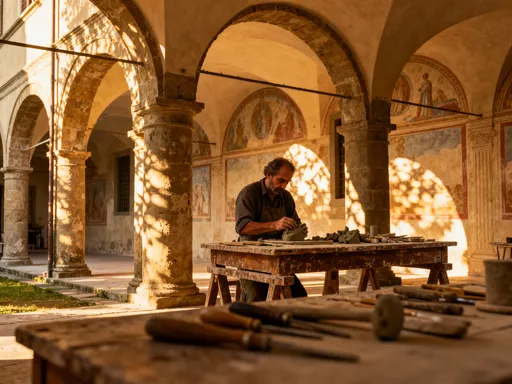
In Florence, art is not something you only look at—it’s something you do. Across the city, family-run studios offer hands-on workshops that invite travelers to become creators, not just observers. These experiences go beyond souvenirs; they are gateways into the techniques that have shaped Florence’s identity for over 500 years. Imagine holding a fine sable brush, mixing pigments the way early Renaissance painters did, and carefully applying tempera to a plaster panel in a fresco workshop. Or pressing gold leaf onto a wooden frame with a soft squirrel-hair brush, your breath held to avoid disturbing the delicate material. These moments connect you to a lineage of craftsmanship that time has not erased.
One such studio, tucked away in a narrow alley near Santa Croce, has been making leather goods for four generations. Here, visitors learn to cut, stamp, and stitch vegetable-tanned leather into a simple notebook cover. The master artisan, his hands marked by decades of work, demonstrates each step with patient precision. As you press the hot iron into the leather to seal the edges, you feel a quiet pride—not just in the object you’re making, but in the act of making itself. Another workshop, led by a restorer trained at the Opificio delle Pietre Dure, teaches the ancient art of marbled paper. Swirling colors on a shallow tray come alive as you drag a comb through them, creating patterns that have adorned book covers since the Medici era.
These workshops do more than teach skills—they shift your relationship with art. No longer is it something distant, protected behind velvet ropes. Now, it is tactile, personal, and alive in your hands. The emotional transformation is subtle but profound. You begin to see the care in every detail of Florence’s masterpieces, knowing how much time, patience, and skill each one required. To choose a reputable workshop, look for small group sizes—ideally no more than six people—and instructors with verifiable training or family heritage in the craft. Avoid places that promise quick, mass-produced results. True craftsmanship cannot be rushed. When you invest a few hours in learning a traditional technique, you carry home more than an object. You carry a memory of creation, a thread connecting you to Florence’s enduring spirit.
Hidden Courtyards and Silent Chapels: Discovering Florence’s Quiet Soul
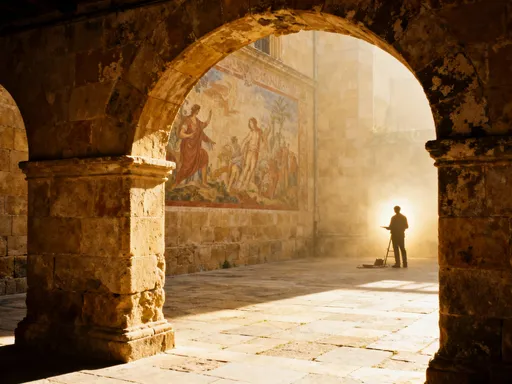
Away from the throngs at the Accademia and the long lines for the Duomo, Florence shelters moments of stillness in its lesser-known corners. These quiet spaces—cloisters, chapels, and walled gardens—offer a different kind of beauty, one that unfolds slowly, like a secret whispered in confidence. The Cloister of Santa Maria delle Carceri, though technically in nearby Prato, embodies this hushed elegance. Surrounded by serene arches and dappled sunlight, it feels suspended in time. The silence here is not empty but full—the kind that allows you to hear your own breath, to notice the way light moves across stone, to feel the weight of centuries without distraction.
In Florence proper, the Brancacci Chapel in the Church of Santa Maria del Carmine holds one of the most powerful artistic revelations in the city. Painted by Masaccio and Masolino in the early 15th century, the frescoes depict scenes from the life of St. Peter with a realism so striking it was revolutionary in its time. The figures have weight, emotion, and depth—qualities that laid the foundation for Renaissance art. Yet, despite its importance, the chapel remains under-visited, partly due to its location and partly because it requires a separate ticket. Stepping inside, you’re met with a cool, dim air and the faint scent of aged plaster. The light filters through high windows, illuminating the faces of the painted figures as if they are still alive.
Another hidden gem is the Chiostro dello Scalzo, a small cloister once used by a brotherhood of flagellants. Its monochrome frescoes by Andrea del Sarto cover the walls with dramatic scenes rendered in grisaille, a technique that mimics sculpture. The effect is haunting and intimate. Because it is rarely crowded, you can stand inches from the artwork, tracing the brushstrokes with your eyes. To visit these places respectfully, arrive early in the morning or late in the afternoon. Check opening hours in advance, as some sites close for lunch or have limited days. Book guided tours when available—they often provide access and context that enrich the experience. Most importantly, move slowly. Let your eyes adjust. Allow the silence to settle. In these quiet chapels and courtyards, Florence reveals its soul not through grandeur, but through stillness.
The Language of Food: More Than Just a Meal
In Tuscany, food is not merely sustenance—it is memory, identity, and love made tangible. To eat in Florence is to taste history, one handmade pasta at a time. Some of the most meaningful experiences come not in restaurants, but in kitchens where nonnas—grandmothers—teach the rhythms of traditional cooking. Joining a pasta-making session in a home near San Frediano, you might learn to roll out pici, a thick hand-rolled spaghetti, or shape delicate ravioli filled with ricotta and spinach. The dough is simple—just flour and eggs—but the technique is passed down through generations, each fold and twist carrying intention.
These sessions are more than cooking lessons; they are conversations without translation. A grandmother’s hands move with instinctive precision, her instructions delivered in a mix of Italian and gestures. She might pause to show you how to test the dough’s elasticity by pressing it gently with your thumb. When it springs back, it’s ready. As you work, stories emerge—of family Sunday lunches, of wartime shortages, of weddings where this very recipe was served. Food becomes a vessel for history, and you, for a moment, are part of the story.
For a deeper understanding, visit the San Lorenzo Market, not just to eat, but to observe. Watch how locals choose their ingredients—the way a woman squeezes a zucchini to test its firmness, or how a man selects a piece of aged bistecca alla Fiorentina by examining the marbling. Vendors take pride in their products, often sourcing from family farms in the surrounding hills. A small stand might sell truffle-infused honey from a grove near Fiesole, or olive oil pressed from trees that have stood for a century. Participating in a wine tasting in a cantina beneath the city allows you to taste the land itself—earthy Chianti, bright Vernaccia, each sip telling of sun-drenched slopes and careful harvests.
To avoid tourist traps, seek out experiences that require reservations and are led by locals, not commercial tour operators. Look for cooking classes held in homes or small community centers. Eat at neighborhood trattorias where the menu changes daily based on what’s fresh. When you slow down and let food unfold as a ritual, you discover that in Florence, every meal is an act of cultural preservation.
Festivals That Time Forgot: Celebrating Local Calendars
Florence’s calendar is marked not by commercial holidays, but by centuries-old traditions that bind the community together. One of the most vibrant is the Festa di San Giovanni, the city’s patron saint, celebrated every June 24th. While tourists may know of the fireworks over the Arno, few witness the full scope of the day’s events—the historical procession in medieval costumes, the blessing of the city at the Baptistery, the boat race on the river. For locals, this is not entertainment; it is identity. Children wave flags with the city’s red lily emblem, elders recount stories of past celebrations, and the scent of grilled meat fills the air as families gather for communal meals.
Another remarkable event is the Calcio Storico, a historic form of football dating back to the 16th century. Played in Piazza Santa Croce, it combines sport, theater, and ritual. Teams representing the four historic quarters of Florence compete in a physically intense game that allows kicking, punching, and even wrestling. The stands erupt with chants and drumming, each neighborhood fiercely proud of its team. Though it draws visitors, the heart of the event remains local. To attend with respect, arrive early for a good view, dress comfortably, and follow the crowd’s lead. Avoid loud or mocking behavior—this is not a spectacle, but a living tradition.
Smaller events, like the flag-throwing displays by the Compagnia dei Balestrieri, offer quieter but equally meaningful glimpses into Florentine pride. In piazzas across the city, costumed performers spin colorful banners with precise, practiced movements. The sound of drums and fifes echoes off stone walls, creating a scene that could have unfolded centuries ago. These festivals are not staged for tourism; they are acts of remembrance and unity. To experience them, consult the city’s official cultural calendar, book accommodations early, and be mindful of transportation changes during major events. When you participate not as a spectator but as a respectful guest, you become part of the celebration’s continuity.
Walking the Medici Path: A Journey Through Power and Patronage
To understand Florence, one must follow the legacy of the Medici family, whose influence shaped the city’s art, politics, and soul. A curated walk through their landmarks reveals how power and creativity intertwined. Begin at the Palazzo Vecchio, the fortress-like town hall that served as a seat of governance. Climb the tower for a view of the city they once ruled, then step into the Hall of the Five Hundred, where Vasari’s vast frescoes glorify Medici rule. Though grand, the space feels charged with political tension—a reminder that art was often a tool of propaganda.
From there, move to the Uffizi Gallery, originally built as government offices but transformed into a gallery by the Medici to display their vast art collection. Walking its corridors is like tracing the evolution of Western art—from Giotto’s early realism to Botticelli’s ethereal mythologies. The Medici didn’t just collect art; they commissioned it, nurtured artists, and used beauty to assert their status. Stand before Michelangelo’s *Doni Tondo* and consider how a private family devotional piece became a masterpiece that defined an era.
The journey culminates at the Villa di Castello, just outside the city, once a Medici country retreat. Its terraced gardens, fountains, and citrus groves were designed as allegories of harmony and control. The villa’s private rooms, less visited than the main galleries, contain intimate portraits and personal artifacts that humanize the family. To plan this walk, allocate a full day. Book timed tickets for the Uffizi and Palazzo Vecchio in advance. Consider a guided tour to unlock deeper historical context. Walk the Ponte Vecchio at dawn to avoid crowds and imagine the Medici’s private passage above, the Vasari Corridor, connecting their residence to government buildings. This path is not just a tour of sites—it’s a meditation on how vision, wealth, and art can shape a city’s destiny.
Why Cultural Immersion Beats Checklist Tourism
Most visitors arrive in Florence with a list: see the David, climb the Duomo, snap a photo at Piazzale Michelangelo. And while these sights are undeniably impressive, they risk reducing the city to a series of bullet points. True appreciation comes not from how many places you see, but from how deeply you engage with one. Consider two travelers: one rushes through the Uffizi in two hours, checking off masterpieces on a map; the other spends 45 minutes sitting before a single Botticelli, letting the colors, composition, and emotion sink in. Their experiences are worlds apart.
Cultural immersion shifts the goal from accumulation to connection. It means learning the name of the woman who sells you your morning cornetto. It means returning to the same bench in a quiet piazza to read and watch the light change. It means choosing a slow meal over a quick bite, savoring each course as part of a rhythm older than tourism. This approach doesn’t require more time—just a different mindset. Instead of asking, “What should I see next?” ask, “What can I feel here, right now?”
When you slow down, Florence reveals its layers. You notice the way a craftsman polishes a frame with beeswax, the way a street musician plays a centuries-old folk tune, the way a priest rings the bell at noon with the same cadence used in 1450. These are not attractions—they are moments of continuity. They remind you that you are not just visiting history; you are walking within it. Checklist tourism leaves you with photos. Immersion leaves you with transformation. It changes how you see not only Florence, but what travel itself can be.
The real Florence isn’t on the map. It’s in the making—in the hands of artisans, the rhythm of daily life, the quiet corners where history breathes. Let your next journey be less about sights and more about significance. When you move beyond the highlights and join the rhythm, you don’t just visit Florence—you become part of it.