You Won’t Believe These Hidden Corners of Rio’s Urban Soul
Rio de Janeiro isn’t just about Christ the Redeemer and Copacabana. Beneath the postcard views lies a city pulsing with secret urban spaces—abandoned theaters turned art hubs, rooftop favela views, and colonial courtyards frozen in time. I stumbled upon these spots by talking to locals and wandering off maps. What I found wasn’t just beauty—it was authenticity. This is Rio’s hidden rhythm, beating quietly between the beats of samba and the roar of the ocean.
Beyond the Postcard: Rio’s Other Side
Rio de Janeiro is often celebrated through its most iconic images: the towering Christ the Redeemer statue with arms outstretched over the city, the golden curve of Copacabana Beach, and the vibrant pulse of Carnival. These landmarks are undeniably powerful, drawing millions of visitors each year. Yet, beyond these well-trodden paths lies a different Rio—one shaped not by guidebooks but by the daily rhythms of its residents. This other side of the city is not less beautiful; it is more intimate, layered with history, resilience, and quiet creativity.
The importance of exploring Rio’s overlooked urban fabric goes beyond mere novelty. Hidden city spaces offer cultural depth, revealing how communities adapt, preserve, and reinvent themselves. They showcase local life in its most unfiltered form—children playing in shaded courtyards, elders sipping coffee in neighborhood squares, musicians rehearsing in repurposed buildings. These moments, though fleeting, offer travelers a chance to experience authenticity, something increasingly rare in an age of mass tourism.
Shifting from tourist trails to neighborhood exploration requires both intention and openness. It means trading rigid itineraries for wandering with curiosity, allowing chance encounters to guide discovery. It means learning to read the city not through maps but through gestures, sounds, and textures. This shift is not just about where you go—it’s about how you see. When you begin to notice the way light filters through iron grilles in colonial homes or how street art tells stories of resistance and hope, Rio reveals itself as more than a destination. It becomes a living narrative, one written in brick, paint, and memory.
The Pulse of Centro: Forgotten Grandeur Revived
Downtown Rio, known locally as Centro, is a district of contrasts—a place where history echoes through grand but weathered facades, and where the past is being quietly rewritten by a new generation of artists and entrepreneurs. Once the bustling heart of commerce and culture in the early 20th century, Centro saw decades of decline as businesses and residents moved to newer neighborhoods. Today, however, the area is experiencing a renaissance, not through large-scale redevelopment, but through grassroots efforts to reclaim its architectural soul.
Walking through Centro, one encounters relics of a bygone era: silent movie theaters with ornate ceilings, decaying mansions that once hosted elite soirées, and vast warehouses that stored coffee bound for Europe. Many of these buildings, though structurally fragile, have been repurposed with care. Abandoned cinemas now host independent film screenings and experimental theater. Old bank vaults have become intimate gallery spaces. A former department store has been transformed into a cultural center offering workshops in music, dance, and visual arts. These transformations are not about erasing the past, but about honoring it through creative reuse.
One of the most striking examples is the area surrounding the Theatro Municipal, Rio’s grand opera house modeled after the Paris Opéra. While the theater itself remains a jewel of the city, the streets around it—once lined with elegant shops and cafés—had fallen into disrepair. In recent years, guided walking tours have begun to spotlight these overlooked spaces, led by historians and local artists who share stories of the district’s golden age and its slow revival. These tours not only educate visitors but also support preservation efforts by drawing attention—and funding—to at-risk buildings.
For travelers interested in exploring Centro, timing and awareness are key. The safest and most vibrant times to visit are during daylight hours, particularly on weekends when cultural events and open-house exhibitions draw crowds. Several organizations offer structured walking tours that prioritize safety while providing access to spaces not typically open to the public. Sticking to well-trafficked streets and traveling with a guide greatly enhances both security and understanding. The rewards are rich: a chance to witness urban renewal in action, to stand inside a forgotten ballroom, and to feel the quiet dignity of a city reclaiming its legacy.
Favela Rooftops with a View: Skyline Secrets
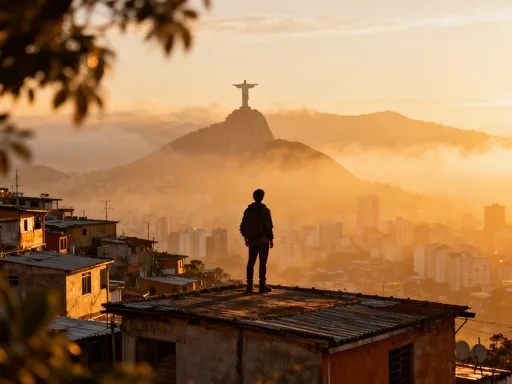
Among Rio’s most breathtaking perspectives are those found not in luxury hotels or observation decks, but atop the homes in its favelas—informal communities built into the hillsides that rise above the city. For decades, these neighborhoods were portrayed through a lens of danger and poverty, their complexity overlooked. Today, a growing number of community-led initiatives are offering authorized tours that provide panoramic views while fostering mutual respect and economic opportunity.
These rooftop experiences are not about voyeurism. They are carefully structured programs designed and led by residents who invite visitors to see their world from a new angle—literally and figuratively. In communities such as Santa Marta and Vidigal, local guides lead small groups up narrow staircases and through winding alleys to reach vantage points that offer sweeping views of the coastline, Sugarloaf Mountain, and the urban sprawl below. From these heights, the city unfolds like a living map, its contrasts and connections suddenly visible.
The role of the local guide is central to these experiences. More than just navigators, they are storytellers, sharing personal histories, neighborhood traditions, and insights into daily life. They explain how the community organizes to provide services, how young people access education, and how music and dance serve as both expression and resistance. These conversations transform the visit from a mere sightseeing stop into a meaningful exchange.
Ethical considerations are paramount when visiting favelas. Respect is the foundation of every responsible tour. Visitors are asked to follow clear guidelines: no intrusive photography, no wandering off the designated path, and no assumptions about the lives of residents. Photography is permitted only with permission, and portraits of people are never taken without consent. These rules are not restrictions—they are acknowledgments of dignity and agency.
Importantly, these tours are designed to benefit the community directly. Entrance fees support local cooperatives, fund youth programs, and help maintain communal spaces. Some tours include visits to small cafés or artisan workshops, where visitors can purchase handmade goods or enjoy a cup of coffee brewed with local beans. By participating, travelers contribute to sustainable development and help shift the narrative around favelas—from spaces of marginalization to places of resilience and innovation.
Green Pockets in the Concrete Maze
In a city known for its dramatic natural landscapes, Rio’s smaller green spaces often go unnoticed. Yet, tucked between buildings and hidden behind hills, these urban oases play a vital role in city life. They offer quiet escapes from the noise and pace of urban living, serve as gathering places for neighbors, and support biodiversity in unexpected ways. From formal parks to informal gardens, these green pockets are essential threads in Rio’s urban fabric.
One of the most serene is the Horto district, located at the base of Corcovado Mountain. Unlike the crowded trails leading to Christ the Redeemer, Horto remains a peaceful residential area with tree-lined paths and community gardens. Long before tourism defined the mountain’s identity, this was a neighborhood of gardeners and farmers who cultivated the slopes. Today, residents continue to maintain small plots, growing herbs, vegetables, and ornamental plants. Morning walks here are accompanied by birdsong and the scent of jasmine, offering a rare sense of calm within the city.
Another hidden gem is the network of pocket plazas in Santa Teresa, a bohemian neighborhood perched on a ridge. These small squares, often no larger than a tennis court, are tucked into street corners and stairway landings. Some feature simple benches and potted plants; others host weekly music sessions or art displays. Despite their size, they function as vital social hubs, where neighbors meet, children play, and artists find inspiration. Their design reflects a deep understanding of urban intimacy—proving that even in a dense city, small spaces can foster big connections.
For visitors, these green zones offer more than scenic beauty. They provide opportunities to experience Rio at a slower pace, to observe daily life, and to engage with residents in relaxed settings. The best times to visit are early morning or late afternoon, when temperatures are cooler and locals are most active. Safety is generally good in these areas, especially when visiting during community events or with a local guide. Combining a visit to a green space with a nearby cultural stop—such as a historic church, independent bookstore, or family-run café—creates a richer, more balanced experience.
These spaces also highlight an important truth: sustainability in cities is not only about large parks or environmental policies. It is also about the small, everyday places where people and nature coexist. By protecting and celebrating these green pockets, Rio honors both its ecological heritage and its human connections.
Backstreet Courtyards and Colonial Echoes
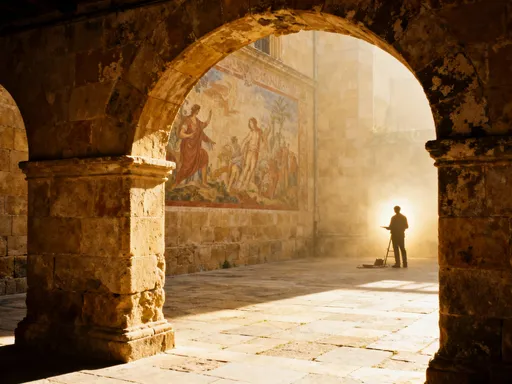
One of Rio’s most enchanting urban features is the hidden courtyard—a tranquil interior space tucked behind unassuming street facades. Found primarily in historic districts like Lapa, Glória, and Catete, these patios are remnants of Portuguese colonial urban design, where narrow streets and tightly packed homes opened into shared interior gardens. These spaces were not merely decorative; they served as social centers, cooling zones, and extensions of domestic life.
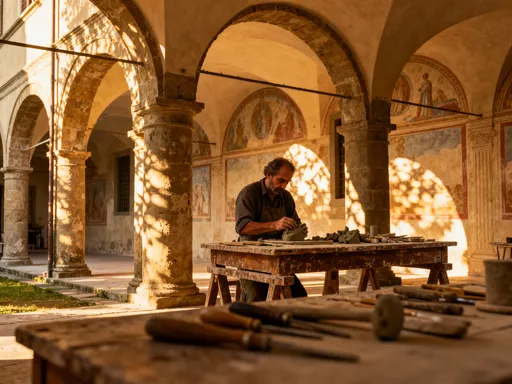
Today, many of these courtyards remain in use, though their functions have evolved. Some still belong to private residences, their existence known only to neighbors. Others have been incorporated into cultural venues, boutique hotels, or cafés, where visitors can step inside and experience their quiet charm. The transition from bustling street to serene interior is often abrupt—a heavy wooden door swings open, and suddenly, the noise fades, replaced by the sound of water trickling from a fountain or leaves rustling in the breeze.
The architectural clues to finding these spaces are subtle but learnable. Buildings with large, weathered doors, iron grilles, or slight recesses from the street line often conceal interior patios. In Lapa, where colonial homes sit alongside 20th-century apartments, a careful eye can spot the difference: older structures tend to be set further back, with ventilation shafts or light wells indicating interior voids. Local cafés and restaurants sometimes occupy former courtyard homes, making them ideal entry points for exploration. A simple coffee break can become a portal to another world.
These spaces are more than aesthetic relics. They represent a philosophy of urban living that values privacy, community, and harmony with nature. In an age of glass towers and sealed environments, they remind us of the importance of transitional spaces—areas that allow for pause, reflection, and human connection. For the traveler, discovering a hidden courtyard is like uncovering a secret—a moment of stillness in a city that never stops moving.
Creative Reuse: From Abandoned to Artistic
Rio’s spirit of reinvention is perhaps most visible in its transformation of abandoned structures into vibrant cultural spaces. Across the city, old factories, disused schools, and decommissioned transport hubs are being repurposed as studios, performance venues, and community centers. These projects are not driven by corporate developers but by artists, activists, and neighborhood groups who see potential where others see decay.
One notable example is a former textile factory in the northern district of São Cristóvão. Once left to ruin, the building now houses a collective of visual artists, ceramicists, and textile designers who use the vast open floors for creation and exhibition. The space retains its industrial character—exposed brick, steel beams, and high ceilings—while incorporating natural light and greenery. Weekly open studios invite the public to observe the creative process, purchase works directly from artists, and participate in workshops.
Another inspiring case is an old tram depot in the port area, revitalized as a hub for dance and music. Once used to store and maintain the city’s vintage trams, the depot now hosts rehearsals for samba schools, capoeira groups, and contemporary dance troupes. The acoustics of the large hall, originally designed for mechanical work, prove ideal for sound-based art. Performances are often free and open to all, reinforcing the idea that culture should be accessible, not exclusive.
These spaces are not tourist attractions in the traditional sense. They do not appear on most city maps, nor do they offer souvenir shops or guided audio tours. Instead, they thrive on authenticity and participation. Travelers who seek them out are not passive observers but engaged guests. They are welcomed not for their cameras, but for their curiosity and respect.
Finding these live-in-art environments requires effort and openness. Word of mouth, local event listings, and social media pages of cultural collectives are often the best sources. Some spaces open only on weekends or during festivals, so flexibility is key. When visiting, modest dress, quiet demeanor, and genuine interest go a long way. A simple “bom dia” and a smile can open doors—and hearts.
Navigating Rio’s Hidden Spaces: A Practical Mindset
Exploring Rio’s hidden corners is not about checking off a list. It is a mindset—one that values patience, presence, and connection over speed and spectacle. This approach requires balancing curiosity with caution, especially in a city as dynamic and layered as Rio. The rewards are immense, but so is the responsibility to travel respectfully and safely.
Transportation plays a crucial role. While taxis and ride-sharing apps offer convenience, they often keep travelers isolated from the city’s texture. Public transit, particularly the modern tram in Santa Teresa or the metro during daylight hours, allows for deeper immersion. Walking, when done in well-populated areas and during daylight, remains one of the best ways to discover the unexpected. However, it is wise to avoid poorly lit streets or deserted areas, especially after dark.
Timing matters as much as location. Early mornings and late afternoons are not only safer but also more socially alive. Markets, bakeries, and neighborhood plazas come to life during these hours, offering natural opportunities for interaction. Weekends often bring community events, open-air markets, and cultural performances that provide entry points into local life.
Cultural sensitivity is equally important. Learning a few basic phrases in Portuguese—such as “obrigada” (thank you), “com licença” (excuse me), and “posso tirar uma foto?” (may I take a photo?)—demonstrates respect and often leads to warmer exchanges. Observing local customs, such as greeting shopkeepers upon entry or waiting your turn in lines, builds trust and goodwill.
Tools for discovery are abundant but require discernment. While travel apps and online guides can point to general areas, the most valuable insights come from conversations with residents—hotel staff, café owners, or fellow passengers on the bus. These personal recommendations often lead to the most memorable experiences. Carrying a small notebook to jot down names and directions helps preserve these fleeting tips.
Ultimately, slow exploration fosters real connection. It allows travelers to move beyond the surface, to understand the rhythms of a neighborhood, and to see Rio not as a collection of sights, but as a living, breathing community. This kind of travel does not demand perfection—it asks only for presence, humility, and an open heart.
Conclusion
Rio’s true magic isn’t in its icons, but in its in-between moments—alleyway murals, shared smiles on staircases, the breeze in a hidden courtyard. These urban secrets don’t shout; they whisper. They are found not in grand gestures but in quiet details: the pattern of tiles beneath a doorway, the sound of a guitar drifting from an open window, the way sunlight falls across a cobblestone path at dusk. By seeking them, we don’t just see Rio—we feel it. We walk its streets with greater awareness, listen with deeper curiosity, and connect with its people on a human level. And in doing so, we honor not just a destination, but its living, breathing soul. This is the Rio that stays with you long after you’ve left—the one that lives not in photographs, but in memory and meaning.